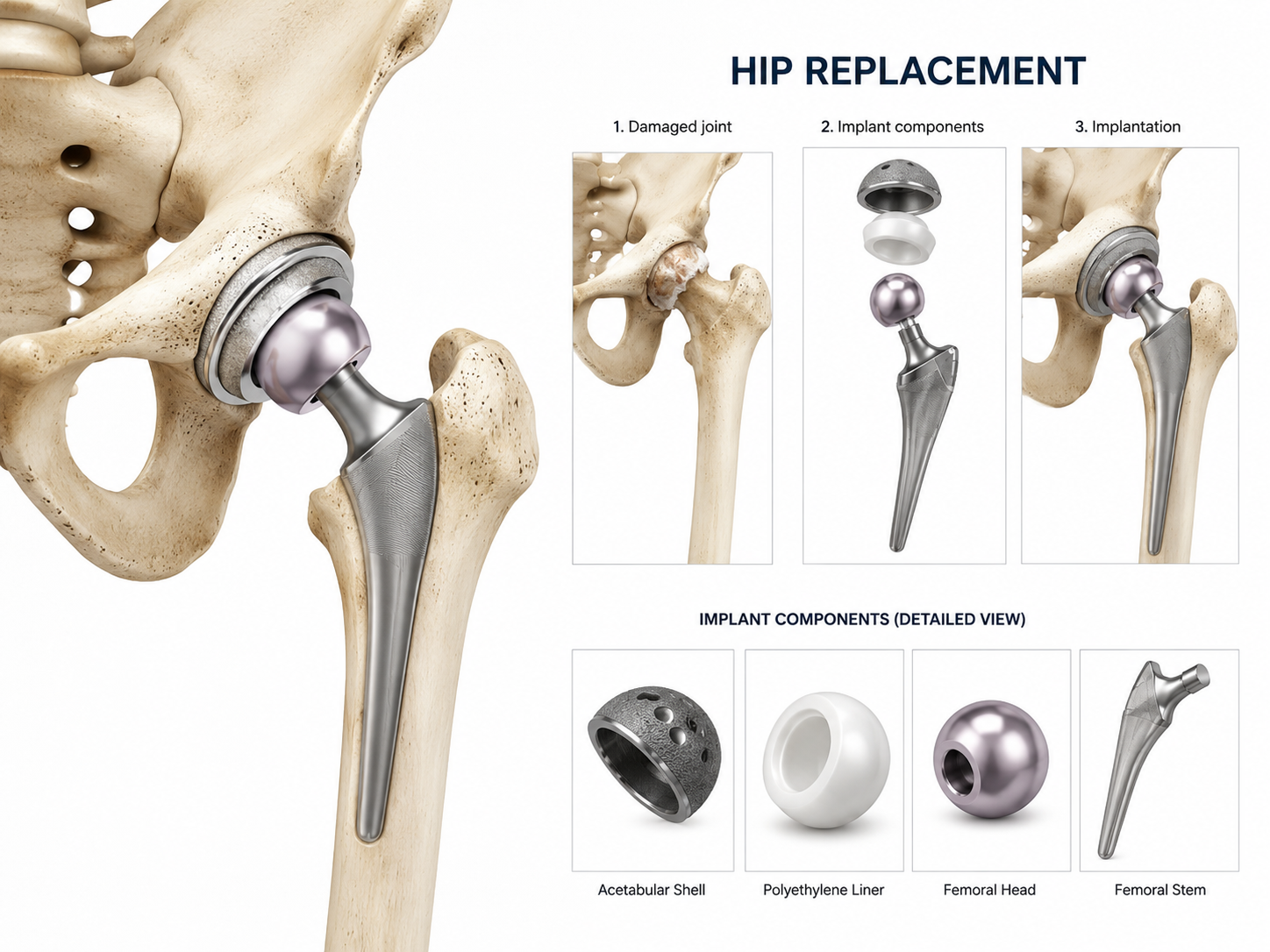
Leg Surgery Treatment
Leg Surgery
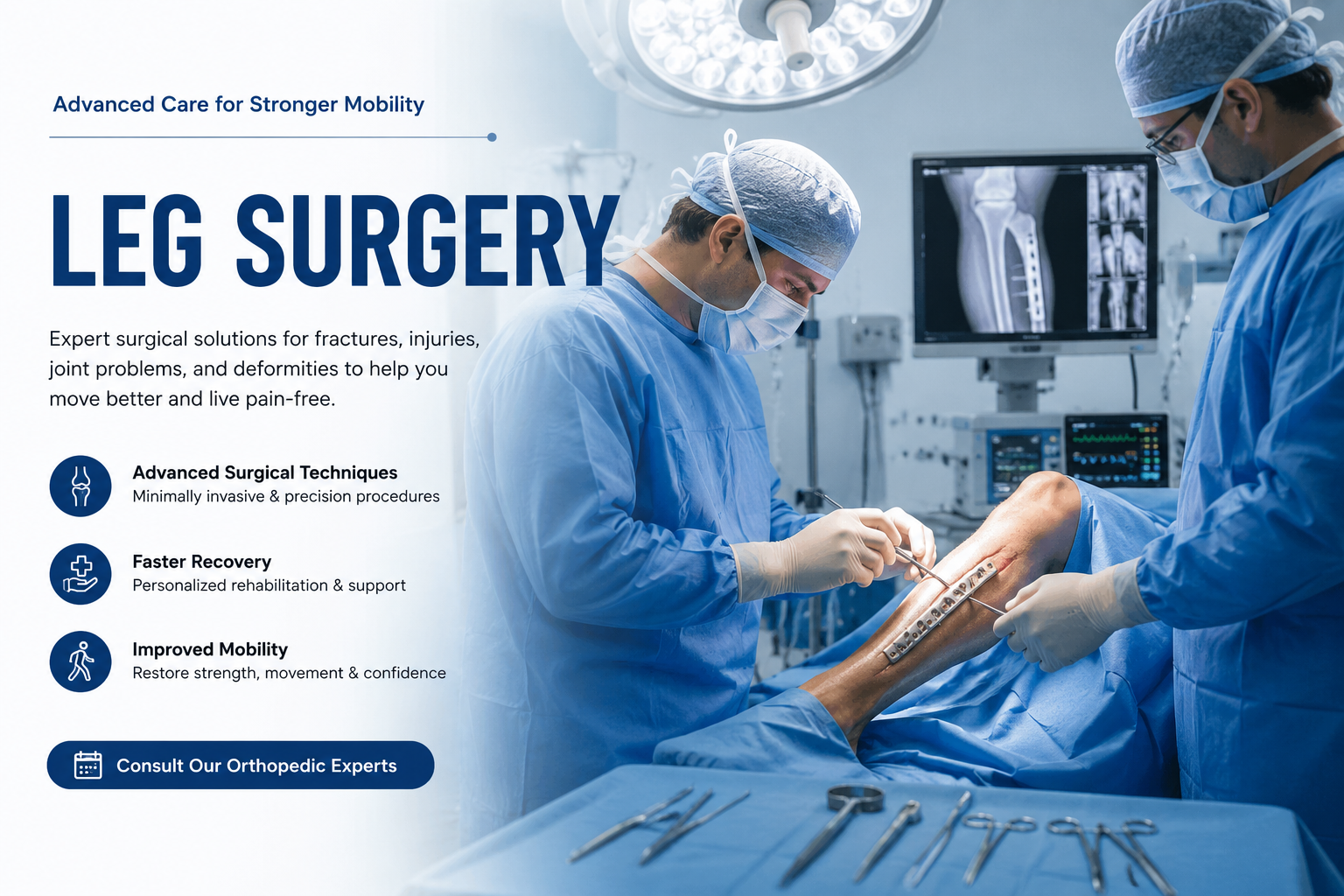
Leg surgery includes a wide range of orthopedic and vascular procedures performed to treat injuries, fractures, deformities, joint problems, nerve compression, muscle damage, and circulation-related conditions affecting the legs. These surgeries are designed to restore movement, reduce pain, improve strength, and help patients return to normal daily activities. Modern leg surgery techniques use advanced diagnostic imaging, minimally invasive procedures, robotic assistance, and rehabilitation programs to improve surgical outcomes and speed up recovery. Depending on the condition, surgery may involve bones, joints, muscles, ligaments, tendons, blood vessels, or nerves within the leg.
What is Leg Surgery?
Leg surgery refers to surgical procedures performed to repair or treat problems involving the upper leg, knee, lower leg, ankle, or surrounding soft tissues. These procedures may be required after accidents, sports injuries, fractures, severe arthritis, infections, congenital deformities, or circulation disorders. The main goal of leg surgery is to relieve pain, restore mobility, improve stability, and prevent long-term complications. Some surgeries focus on repairing damaged bones or ligaments, while others may involve joint replacement, nerve decompression, or vascular correction procedures.
Common Causes Requiring Leg Surgery
Several medical conditions and injuries may require surgical treatment of the leg.
Sports injuries
Previous ligament tears, fractures, or muscle injuries can weaken the leg structure and increase the risk of long-term joint or bone problems.
Poor bone health
Conditions like osteoporosis reduce bone strength, making leg bones more vulnerable to fractures and surgical complications.
Excess body weight
Extra body weight places additional pressure on the knees, hips, and leg joints, accelerating wear and reducing mobility over time.
Age-related degeneration
As people age, cartilage naturally wears down and muscles weaken, increasing the likelihood of severe leg pain and orthopedic surgery.
Symptoms of Severe Leg Problems
Patients experiencing severe leg conditions may suffer from persistent pain, swelling, weakness, stiffness, numbness, or difficulty walking. Some individuals may experience instability while standing, muscle cramps, reduced movement, or visible deformities in the leg. Other symptoms can include redness, warmth, difficulty bearing weight, tingling sensations, limited joint flexibility, or severe pain during movement. In vascular conditions, patients may experience poor circulation, leg ulcers, or discoloration of the skin.
Symptoms of Severe Leg Problems
Persistent leg pain or discomfort
Symptoms of Severe Leg Problems
Swelling in the leg or joints
Symptoms of Severe Leg Problems
Weakness or instability in the leg
Weakness or instability in the leg
Limited range of movement
Leg Surgery Treatment
Imaging, procedure stages, and rehabilitation milestones.
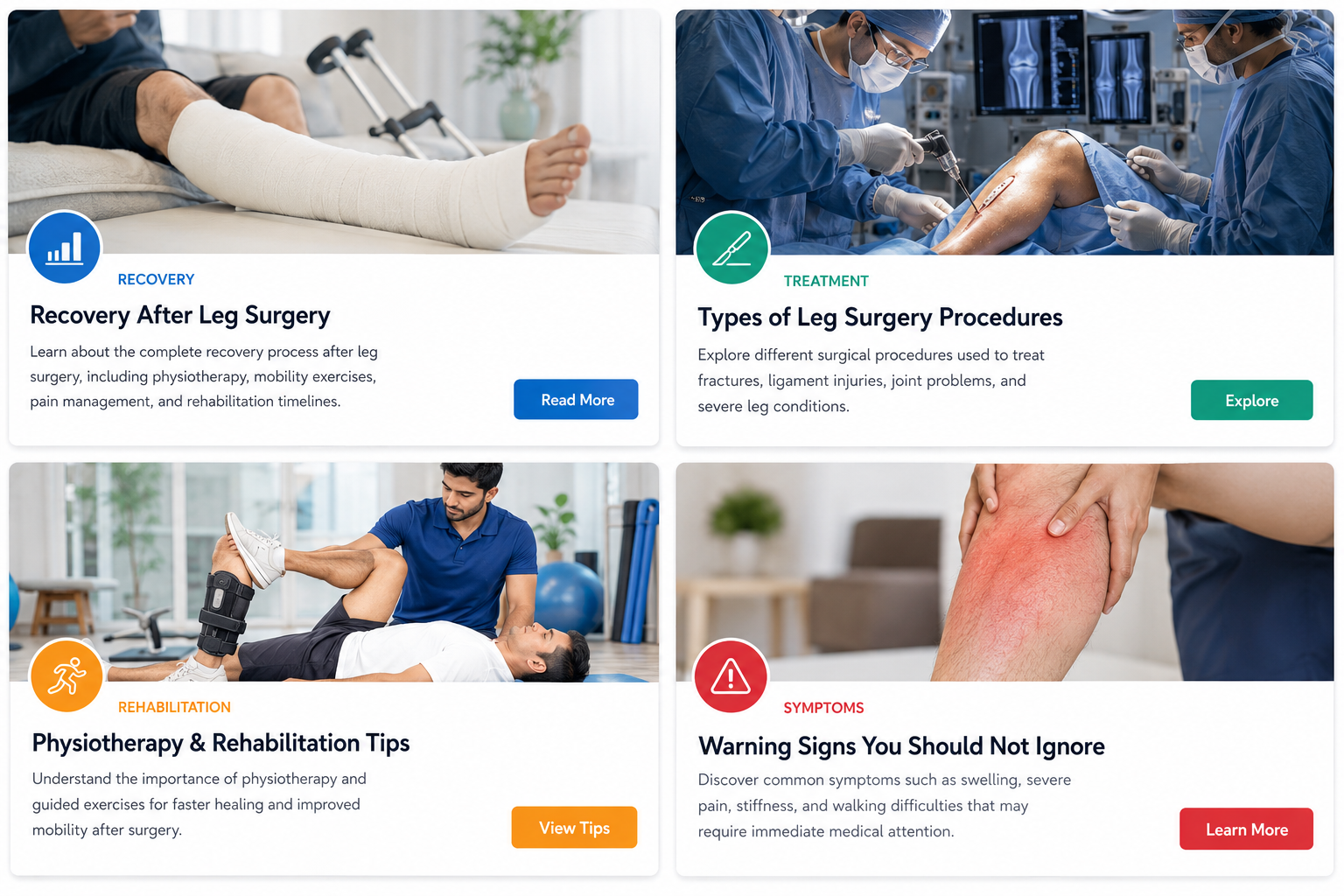
Types of Leg Surgery
Different types of leg surgery are available depending on the patient’s condition and the severity of the problem. Fracture fixation surgery is performed using plates, screws, rods, or external fixation devices to stabilize broken bones. Ligament reconstruction surgery is commonly performed for torn ACL, PCL, or other knee ligaments. Joint replacement surgery may be recommended for advanced arthritis affecting the knee or hip joints. Vascular surgeries help improve blood circulation in patients with blocked or damaged blood vessels. Minimally invasive arthroscopic procedures are also widely used to repair joint damage with smaller incisions and faster recovery times.
Physiotherapy & Exercise
Customized physiotherapy programs help improve strength, flexibility, balance, and mobility while reducing pain and stiffness in the leg.
Non-SurgicalPain Management Medications
Anti-inflammatory medications and pain relievers are commonly used to reduce discomfort and swelling in leg-related conditions.
Initial CareBraces & Walking Support
Leg braces, walkers, or support devices help stabilize movement and reduce pressure on injured joints or bones.
Supportive CareCorticosteroid Injection
Steroid injections help reduce inflammation, swelling, and severe joint pain affecting the leg or knee.
Pain ReliefPRP Injection Therapy
Platelet-rich plasma therapy uses the patient’s own blood components to support tissue healing and recovery.
RegenerativeFracture Fixation Surgery
Surgical fixation using plates, screws, or rods helps stabilize broken bones and support proper healing.
AdvancedLigament Reconstruction Surgery
Torn ligaments such as ACL or PCL injuries may require surgical reconstruction for joint stability.
OrthopedicRecovery After Leg Surgery
Recovery after leg surgery depends on the type of procedure performed and the patient’s overall health. Proper physiotherapy, medications, rest, and gradual movement are important for restoring strength, mobility, and flexibility. Most patients begin rehabilitation shortly after surgery to improve circulation, reduce stiffness, and support faster healing.
-
1–3
Initial Recovery & Pain Management Patients are monitored closely after surgery. Pain medications, swelling control, and assisted movement are started during this early recovery phase.
-
1–2
Walking Support & Basic Movement Patients gradually begin walking with support such as crutches or walkers while continuing light physiotherapy exercises.
-
3–6
Strength & Mobility Improvement Physiotherapy focuses on improving leg strength, flexibility, balance, and restoring normal joint movement.